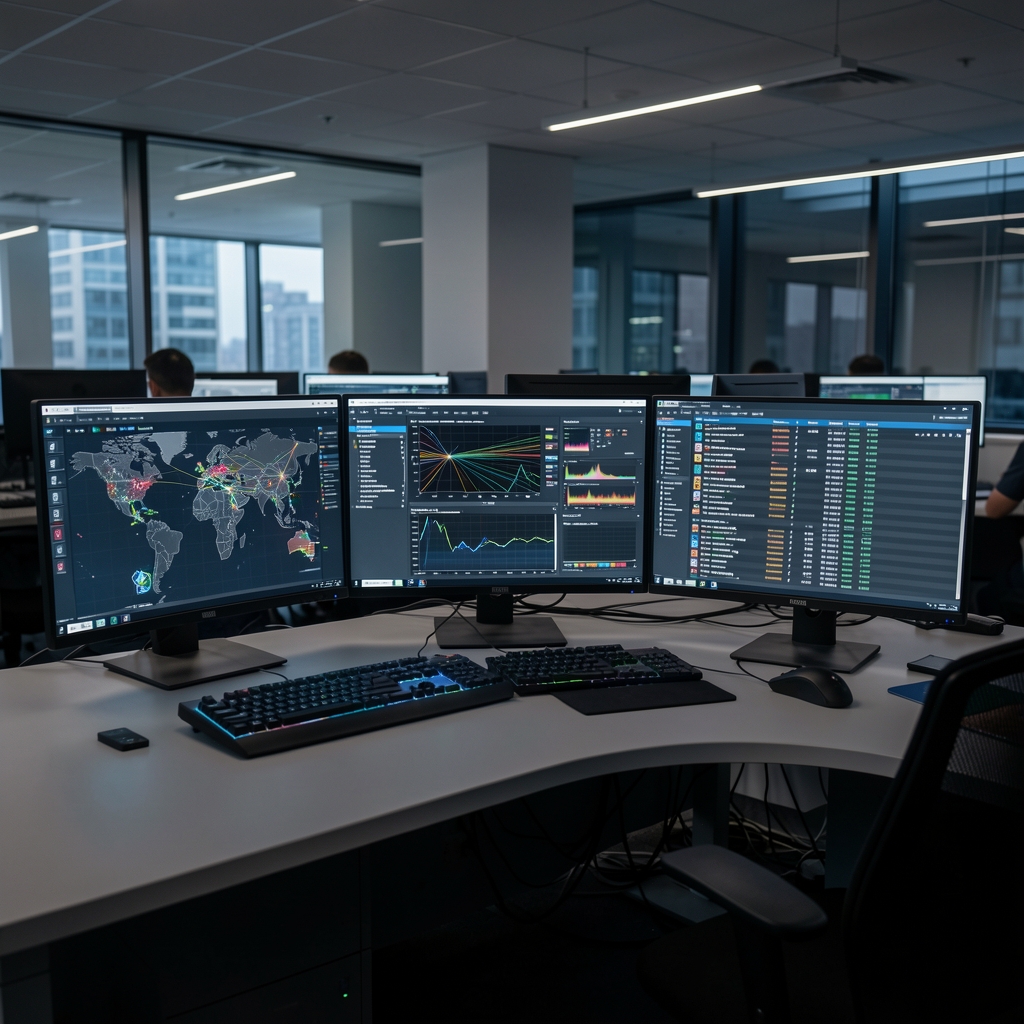
Enterprise security environments often become increasingly difficult to operate when technology is purchased one product at a time in response to isolated threats, audit findings, compliance requirements, incidents, or newly identified vulnerabilities.
Over several years, this purchasing pattern can create an environment filled with overlapping products, disconnected security data, inconsistent workflows, integration gaps, multiple renewal cycles, higher licensing expense, and significant additional work for already constrained security teams.
A stronger vendor-selection process evaluates more than product functionality. It considers how each platform fits within the organization's broader security architecture, operating model, data flows, technology portfolio, risk profile, and long-term strategic direction.
Why Point-Solution Procurement Creates Security Complexity
Specialized security tools can be valuable when they solve a clearly defined requirement. The problem appears when every new risk results in another independent platform without reviewing the effect on the broader enterprise security environment.
Over time, this pattern can produce:
- Overlapping capabilities across several security platforms
- Disconnected alerts, telemetry, and security-event information
- Unclear responsibility between overlapping products
- Gaps in visibility between technology domains
- More vendor relationships and contract-renewal cycles
- Higher integration, configuration, and maintenance effort
- Additional dashboards and workflows for analysts
- Difficulty demonstrating whether the overall security portfolio is becoming more effective
Vendor evaluation should therefore examine how a product affects the complete security operating model rather than judging it solely on the strength of individual features.
The Global VLAN Security Platform Fit Framework
Global VLAN recommends evaluating enterprise cybersecurity vendors across six major dimensions. The specific weighting can be adjusted according to regulatory obligations, architecture, operational priorities, risk exposure, security maturity, and strategic requirements.
Architecture & Integration
API quality, interoperability, data exchange, identity integration, SIEM and SOAR connectivity, endpoint compatibility, cloud integration, and fit with existing security platforms.
Operational Efficiency
Alert quality, workflow simplicity, automation potential, administrative burden, analyst experience, tuning requirements, and day-to-day operational effort.
Threat Intelligence & Detection
Threat research capabilities, detection quality, contextual intelligence, update speed, investigation support, and responsiveness to emerging attack patterns.
Security & Compliance Coverage
Alignment with relevant security controls, reporting obligations, compliance requirements, audit needs, risk-management processes, and governance expectations.
Vendor Strength & Direction
Financial stability, market position, customer base, roadmap credibility, investment strategy, acquisition exposure, product direction, and long-term enterprise suitability.
Support & Service Model
Incident support, escalation processes, technical expertise, implementation assistance, service commitments, response expectations, and account-management quality.
A Four-Phase Cybersecurity Vendor Evaluation Process
Phase 1 — Define the Security Requirement
Vendor selection should begin before vendors are invited into the process. The organization first needs a clear picture of its threat model, regulatory requirements, existing tools, architecture, control gaps, operational limitations, integration requirements, and strategic objectives.
The output should be a capability-gap view that explains what the organization is trying to improve and which existing capabilities are already available elsewhere in the security portfolio.
Phase 2 — Build the Market Longlist
The capability-gap view can then be used to identify possible vendors. Market research should not be limited only to the largest or most familiar brands.
In some cases, a specialized platform may offer stronger technical alignment, cleaner integration, or more efficient operations than a broader platform. In other situations, consolidating onto an existing strategic vendor may reduce complexity even if another product performs slightly better in a narrow feature comparison.
Phase 3 — Structured Evaluation and Reference Review
The RFP or evaluation process should be organized around business, security, architecture, and operating-model requirements rather than a long checklist of isolated features.
Vendors should be asked to explain their integration model, data architecture, deployment requirements, administrative workload, implementation assumptions, security controls, roadmap, support structure, licensing model, and relevant operational dependencies.
Customer references can also reveal information that product demonstrations rarely expose, including upgrade challenges, implementation delays, support quality, hidden complexity, tuning requirements, integration limitations, and the actual workload required to operate the platform.
Phase 4 — Proof of Concept
For finalists, a controlled proof of concept can help determine how a platform performs within an environment that resembles real enterprise conditions.
Success criteria should be established before testing begins. This creates a consistent basis for comparing vendors and prevents the proof of concept from becoming a vendor-controlled demonstration.
Evaluation criteria may include:
- Deployment and configuration effort
- Integration with existing security services
- Detection or alert quality
- Analyst usability
- Automation capability
- Reporting quality
- Administrative overhead
- Data handling and retention
- Operational scalability
Enterprise Security Contract Considerations
Commercial negotiations should not focus exclusively on the initial subscription price. Security platforms can become deeply integrated into operational processes, which makes contractual flexibility and exit planning particularly important.
Areas worth examining include:
- Data portability and retrieval: Define how data, logs, configurations, and relevant records can be retrieved if the organization exits the platform.
- Incident-response commitments: Clarify severity classifications, escalation channels, support hours, response expectations, and communication responsibilities.
- License and consumption metrics: Understand how pricing changes as endpoints, identities, users, cloud assets, workloads, events, or data volumes increase.
- Security-event notification: Include appropriate requirements for notifying the organization when an incident involving the vendor could affect systems, services, or information.
- Integration rights: Confirm that APIs, connectors, exports, and required interoperability remain available for the duration of the agreement.
- Renewal mechanics: Review renewal dates, notice periods, uplift clauses, automatic renewal terms, and pricing protections.
- Termination and transition: Understand the technical and commercial requirements for leaving the platform and transitioning to another provider.
Evaluate the Portfolio, Not Just the Product
Security teams should also ask whether a proposed technology reduces or increases overall portfolio complexity.
A product may perform extremely well in isolation but still be a poor enterprise choice if it duplicates existing capabilities, creates another independent data store, requires a separate operational team, or introduces additional integration points that outweigh the security benefit.
Conversely, a platform with slightly fewer specialist features may create greater overall value when it simplifies operations, improves visibility, reduces duplicated controls, and strengthens integration across the wider security architecture.
Global VLAN Perspective: The strongest individual cybersecurity product is not automatically the strongest enterprise decision. Platform fit, integration quality, operating burden, architecture coherence, and long-term manageability should be evaluated alongside security capability.