Our Five-Stage Advisory Model
Each stage can be adapted according to the organization's objectives, technology environment, level of complexity, available information, and desired outcomes.
Discovery & Environment Assessment
The engagement begins by developing a structured understanding of the organization's current technology landscape, business priorities, stakeholders, constraints, risks, and existing capabilities.
Depending on scope, this stage may involve stakeholder discussions, documentation review, architecture analysis, infrastructure and application assessment, operating-model evaluation, data review, and identification of key technical and organizational dependencies.
The goal is to establish a common factual foundation before strategic options or recommendations are developed.
Possible Outputs
- Current Environment Review
- Architecture Summary
- Risk & Issue Register
- Baseline Measures
- Stakeholder Findings
- Executive Assessment
Strategic Direction & Future-State Design
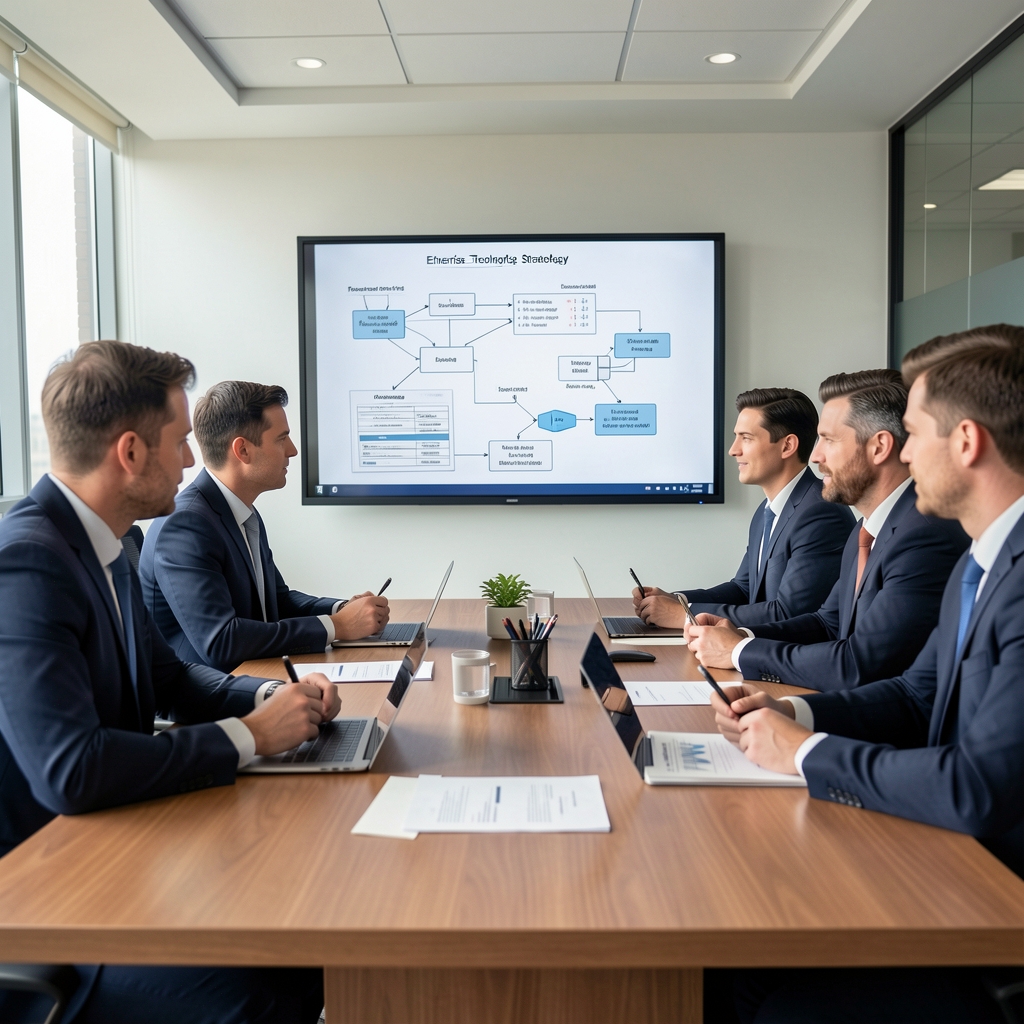
The second stage defines a practical future state based on identified gaps, business priorities, operating requirements, strategic objectives, and relevant technology constraints.
This may include architecture principles, platform direction, governance requirements, security expectations, data needs, organizational capabilities, technology standards, and clear criteria for future technology decisions.
Where relevant, business and financial scenarios may also be examined to compare different strategic options and investment approaches.
Possible Outputs
- Future-State Architecture
- Strategic Technology Principles
- Platform Selection Criteria
- Investment Options
- Capability Requirements
- Governance Model
Roadmap Development & Strategic Prioritization
This stage converts the future-state direction into an actionable roadmap. Initiatives are assessed according to expected business value, dependencies, risk, organizational readiness, implementation effort, timing, and available resources.
When technology procurement is involved, the work may also include vendor evaluation models, market research, structured comparisons, proof-of-concept planning, commercial considerations, and decision criteria.
Possible Outputs
- Integrated Technology Roadmap
- Initiative Prioritization
- Business Case Inputs
- Vendor Assessment Framework
- Governance Structure
- Change & Communication Plan
Execution Advisory & Strategic Oversight
Where execution support is included in the engagement, Global VLAN may provide independent strategic review and advisory oversight while implementation progresses.
This may include reviewing major architecture decisions, delivery risks, changes in scope, vendor choices, governance concerns, dependencies, and alignment between the original strategy and evolving delivery conditions.
The exact level of involvement depends on the agreed engagement scope and should remain clearly separated from direct project ownership or day-to-day implementation responsibility unless otherwise agreed.
Possible Outputs
- Program Health Assessments
- Architecture Reviews
- Risk & Dependency Updates
- Change Impact Analysis
- Leadership Briefing Materials
Outcome Review & Knowledge Transfer
The final stage focuses on reviewing results, documenting lessons, transferring useful knowledge, and helping establish the governance and improvement practices needed after the engagement.
Where baselines and measurable success criteria were established earlier, actual results can be compared against those expectations to evaluate progress and identify areas requiring further work.
Knowledge transfer may include operating documentation, governance procedures, review sessions, training, reusable frameworks, and recommendations for future priorities.
Possible Outputs
- Outcome Assessment
- Baseline Comparison
- Operating Guidance
- Knowledge Transfer Sessions
- Post-Implementation Review
- Improvement Roadmap